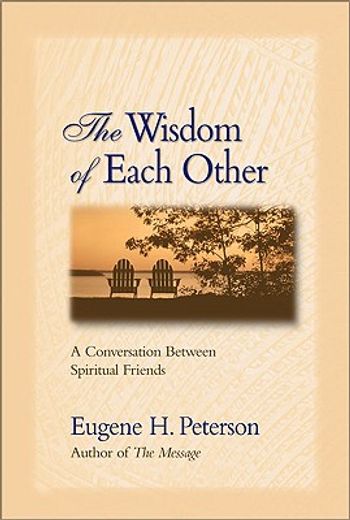
the wisdom of each other,a conversation between spiritual friends
Eugene H. Peterson
Synopsis "the wisdom of each other,a conversation between spiritual friends"
An illuminating example of friendship as a vital way God answers our need for guidance, encouragement, affirmation, and correction.Most of the time, what we need to help us through the struggles in our lives is not the advice of an expert but the wisdom of a friend. Through this series of eloquent letters written to a life-long friend, author Eugene Peterson demonstrates friendship as a means to Christian maturity.The topics covered in this warm and highly personal correspondence are broad and varied, but one thing comes through with constancy and clarity: there is great value in a wise, experienced friend to help us see more clearly and to strengthen our growth in faith and godliness.
Eugene H. Peterson (1932–2018) fue un pastor, teólogo, escritor y profesor estadounidense reconocido por su enfoque cálido, pastoral y profundamente humano de la vida cristiana. Nacido en Washington y criado en Montana, creció en un entorno marcado por la fe sencilla de su madre pentecostal y el oficio de carnicero de su padre, experiencias que más tarde influyeron en su comprensión práctica y cercana del Evangelio.
Peterson estudió en Seattle Pacific University, el Seminario Teológico de Nueva York y la Universidad Johns Hopkins, donde combinó la formación pastoral con la académica. Durante casi treinta años fue pastor fundador de Christ Our King Presbyterian Church en Maryland, etapa que moldeó gran parte de su pensamiento espiritual y su compromiso con el acompañamiento personal de las comunidades de fe.
Es célebre por The Message, una paráfrasis contemporánea de la Biblia que buscó hacer el texto accesible, directo y comprensible para los lectores modernos. Además, escribió numerosas obras sobre espiritualidad, liderazgo pastoral y vida cristiana, entre ellas Un pastor según el corazón de Dios, Larga obediencia en la misma dirección y Compañeros en el camino.
Peterson fue apreciado por su lenguaje poético, su énfasis en la vida interior y su invitación constante a una fe vivida con autenticidad, lentitud y profundidad.