Hallo! Tracked shipping to Austria with Delivery Duty Paid for just €3.99  

Ship to
Austria
0
  • argentina
  • chile
  • colombia
  • españa
  • méxico
  • perú
  • estados unidos
  • internacional

Select your country

Americas

Europe

Rest of the world

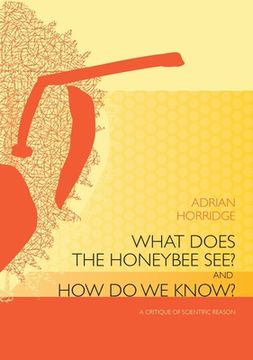
portada What does the Honeybee See? And how do we Know?: A critique of scientific reason
Type
Physical Book
Publisher
Language
English
Pages
386
Format
Paperback
Dimensions
25.0 x 17.6 x 2.7 cm
Weight
0.88 kg.
ISBN13
9781921536984

What does the Honeybee See? And how do we Know?: A critique of scientific reason

Adrian Horridge (Author) · Anu Press · Paperback

What does the Honeybee See? And how do we Know?: A critique of scientific reason - Horridge, Adrian

New Book Imported to Austria
Delivery: 14 Aug - 18 Aug Shipping: 4 to 5 business days.
41,85 €
Import costs and 10% VAT included in the price ✅
41,85 €

Synopsis "What does the Honeybee See? And how do we Know?: A critique of scientific reason"

This book is the only account of what the bee, as an example of an insect, actually detects with its eyes. Bees detect some visual features such as edges and colours, but there is no sign that they reconstruct patterns or put together features to form objects. Bees detect motion but have no perception of what it is that moves, and certainly they do not recognize "things" by their shapes. Yet they clearly see well enough to fly and find food with a minute brain. Bee vision is therefore relevant to the construction of simple artificial visual systems, for example for mobile robots. The surprising conclusion is that bee vision is adapted to the recognition of places, not things. In this volume, Adrian Horridge also sets out the curious and contentious history of how bee vision came to be understood, with an account of a century of neglect of old experimental results, errors of interpretation, sharp disagreements, and failures of the scientific method. The design of the experiments and the methods of making inferences from observations are also critically examined, with the conclusion that scientists are often hesitant, imperfect and misleading, ignore the work of others, and fail to consider alternative explanations. The erratic path to understanding makes interesting reading for anyone with an analytical mind who thinks about the methods of science or the engineering of seeing machines.

Customers reviews

Frequently Asked Questions about the Book

All books in our catalog are Original.
The book is written in English.
The binding of this edition is Paperback.

Questions and Answers about the Book

Do you have a question about the book? Login to be able to add your own question.

Opinions about Bookdelivery

More customer reviews