Hallo! Tracked shipping to Austria with Delivery Duty Paid for just €3.99  

Ship to
Austria
0
  • argentina
  • chile
  • colombia
  • españa
  • méxico
  • perú
  • estados unidos
  • internacional

Select your country

Americas

Europe

Rest of the world

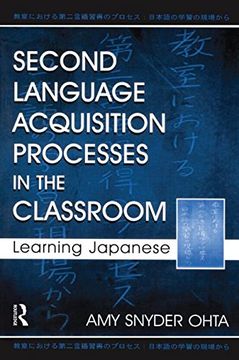
portada Second Language Acquisition Processes in the Classroom: Learning Japanese (Second Language Acquisition Research Series)
Type
Physical Book
Publisher
Year
2001
Language
English
Pages
316
Format
Paperback
Weight
1.15
ISBN
0805838015
ISBN13
9780805838015
Edition No.
1

Second Language Acquisition Processes in the Classroom: Learning Japanese (Second Language Acquisition Research Series)

Amy Snyder Ohta (Author) · Routledge · Paperback

Second Language Acquisition Processes in the Classroom: Learning Japanese (Second Language Acquisition Research Series) - Amy Snyder Ohta

Cheaper New Book Imported to Austria
Delivery: 01 Sep - 07 Sep Shipping: 10 to 13 business days.
108,83 €
Faster New Book Imported to Austria
Delivery: 21 Aug - 25 Aug Shipping: 4 to 5 business days.
109,59 €
Import costs and 10% VAT included in the price ✅
108,83 €

Synopsis "Second Language Acquisition Processes in the Classroom: Learning Japanese (Second Language Acquisition Research Series) "

This book is the first study to examine how interactional style develops within the walls of a foreign language classroom in the first two years of language study. Results show learners to be highly sensitive to pragmatic information and that learners can move toward an appropriate interactional style through classroom interactive experience. The book shows how learners are most often sources who offer assistance and correction, with errors serving most often to stimulate further thinking about what form is correct. Analysis shows learners to be active in seeking corrective information in the classroom setting, not only from peer partners but also from the teacher. They are active in noticing how the teacher's utterances--even when addressed to others--contrast with their own, and utilize corrective feedback intended for other students. In addition, the results show that teacher-initiated corrective feedback addressed to individual learners is only one source of corrective feedback. Learners are shown to be active in both teacher-fronted and peer interactive settings. In newer L2 teaching methodologies which focus on the use of peer interactive tasks, the teacher's role has been de-emphasized. This book, however, shows how important the teacher's role is. The final chapter examines how the teacher can act to maximize the benefits of peer interactive tasks through how they design tasks and present them to the class. First, the chapter looks at how learners use English--their L1--in the classroom, concluding that how teachers present activities to the class has an impact on the amount of L1 used by students during peer interaction. Following up on this finding, the chapter works to address questions that teachers face in lesson planning and teaching. It presents a useful list of questions teachers can ask when designing peer interactive tasks in order to maximize the effectiveness of a wide variety of language learning tasks.

Customers reviews

Frequently Asked Questions about the Book

All books in our catalog are Original.
The book is written in English.
The binding of this edition is Paperback.

Questions and Answers about the Book

Do you have a question about the book? Login to be able to add your own question.

Opinions about Bookdelivery

More customer reviews