Tracked shipping to Austria with premium packaging for just 3,99 € 

Ship to
Austria
0
  • argentina
  • chile
  • colombia
  • españa
  • méxico
  • perú
  • estados unidos
  • internacional

Select your country

Americas

Europe

Rest of the world

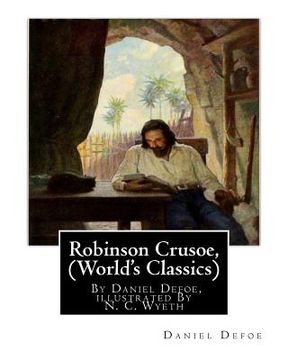
portada Robinson Crusoe, By Daniel Defoe, illustrated By N. C. Wyeth (World's Classics): Newell Convers Wyeth (October 22, 1882 - October 19, 1945), known as
Type
Physical Book
Publisher
Language
English
Pages
172
Format
Paperback
Dimensions
25.4 x 20.3 x 0.9 cm
Weight
0.35 kg.
ISBN13
9781536821604

Robinson Crusoe, By Daniel Defoe, illustrated By N. C. Wyeth (World's Classics): Newell Convers Wyeth (October 22, 1882 - October 19, 1945), known as

Daniel Defoe (Author) · N. C. Wyeth (Author) · Createspace · Paperback

Robinson Crusoe, By Daniel Defoe, illustrated By N. C. Wyeth (World's Classics): Newell Convers Wyeth (October 22, 1882 - October 19, 1945), known as - Daniel Defoe

New Book Imported to Austria
Delivery: 20 Jul - 27 Jul Shipping: 16 to 20 business days.
19,69 €
Import costs and 10% VAT included in the price ✅
19,69 €

Synopsis "Robinson Crusoe, By Daniel Defoe, illustrated By N. C. Wyeth (World's Classics): Newell Convers Wyeth (October 22, 1882 - October 19, 1945), known as"

Robinson Crusoe is a novel by Daniel Defoe, first published on 25 April 1719. The first edition credited the work's protagonist Robinson Crusoe as its author, leading many readers to believe he was a real person and the book a travelogue of true incidents. It was published under the full title The Life and Strange Surprizing Adventures of Robinson Crusoe, Of York, Mariner: Who lived Eight and Twenty Years, all alone in an un-inhabited Island on the Coast of America, near the Mouth of the Great River of Oroonoque; Having been cast on Shore by Shipwreck, wherein all the Men perished but himself. With An Account how he was at last as strangely deliver'd by Pyrates. Plot sumary--Crusoe (the family name corrupted from the German name "Kreutznaer") sets sail from the Queen's Dock in Hull on a sea voyage in August 1651, against the wishes of his parents, who want him to pursue a career, possibly in law. After a tumultuous journey where his ship is wrecked in a storm, his lust for the sea remains so strong that he sets out to sea again. This journey, too, ends in disaster, as the ship is taken over by Salé pirates (the Salé Rovers) and Crusoe is enslaved by a Moor. Two years later, he escapes in a boat with a boy named Xury; a captain of a Portuguese ship off the west coast of Africa rescues him. The ship is en route to Brazil. Crusoe sells Xury to the captain. With the captain's help, Crusoe procures a plantation. Years later, Crusoe joins an expedition to bring slaves from Africa, but he is shipwrecked in a storm about forty miles out to sea on an island (which he calls the Island of Despair) near the mouth of the Orinoco river on 30 September 1659. The details of Crusoe's island were probably based on the Caribbean island of Tobago, since that island lies a short distance north of the Venezuelan coast near the mouth of the Orinoco river, in sight of Trinidad.[4] He observes the latitude as 9 degrees and 22 minutes north. He sees penguins and seals on his island. (However, seals and penguins live together in the Northern Hemisphere only around the Galápagos Islands.) As for his arrival there, only he and three animals, the captain's dog and two cats, survive the shipwreck. Overcoming his despair, he fetches arms, tools and other supplies from the ship before it breaks apart and sinks. He builds a fenced-in habitat near a cave which he excavates. By making marks in a wooden cross, he creates a calendar. By using tools salvaged from the ship, and some he makes himself from "ironwood", he hunts, grows barley and rice, dries grapes to make raisins, learns to make pottery and raises goats. He also adopts a small parrot. He reads the Bible and becomes religious, thanking God for his fate in which nothing is missing but human society. More years pass and Crusoe discovers native cannibals, who occasionally visit the island to kill and eat prisoners. At first he plans to kill them for committing an abomination but later realizes he has no right to do so, as the cannibals do not knowingly commit a crime. He dreams of obtaining one or two servants by freeing some prisoners; when a prisoner escapes, Crusoe helps him, naming his new companion "Friday" after the day of the week he appeared. Crusoe then teaches him English and converts him to Christianity...... Daniel Defoe ( 1660 - 24 April 1731), born Daniel Foe, was an English trader, writer, journalist, pamphleteer, and spy, most famous for his novel Robinson Crusoe. Newell Convers Wyeth (October 22, 1882 - October 19, 1945), known as N. C. Wyeth, was an American artist and illustrator. He was the pupil of artist Howard Pyle and became one of America's greatest illustrators.
Daniel Defoe
  (Author)
View Author's Page
English writer and journalist, Daniel Defoe is mainly known for his novel Robinson Crusoe (1719), though he also stood out for his role in the development of the press and for his political and social essays

Defoe left his studies to become a discreet businessman, whose activities were not entirely profitable, even receiving prison time for his debts

From 1695, after several years of exile due to his political ideology, he starts a new business dedicated to tiles and bricks which begins to work, providing his family—he was married and had six children—with greater economic stability

However, his political activism leads him to publish several essays or pamphlets that cost him days of imprisonment and the pillory. After returning to jail, Defoe begins working from a magazine supporting political factions of the government, participating in the English secret services

In 1719 he publishes his great novel, Robinson Crusoe, which allows him to launch into a literary career marked by successes such as The Adventures of Captain Singleton, A Journal of the Plague Year, or Moll Flanders. His popularity grew and his influence on subsequent generations of writers by enhancing the novelistic genre is notable

Despite all his success and his connections with the government, Defoe never achieved stable economic solvency for long. His death in 1731 occurred while fleeing from new creditors
See more
See less

Customers reviews

Frequently Asked Questions about the Book

All books in our catalog are Original.
The book is written in English.
The binding of this edition is Paperback.

Questions and Answers about the Book

Do you have a question about the book? Login to be able to add your own question.

Opinions about Bookdelivery

More customer reviews