Hallo! Tracked shipping to Austria with Delivery Duty Paid for just €3.99  

Ship to
Austria
0
  • argentina
  • chile
  • colombia
  • españa
  • méxico
  • perú
  • estados unidos
  • internacional

Select your country

Americas

Europe

Rest of the world

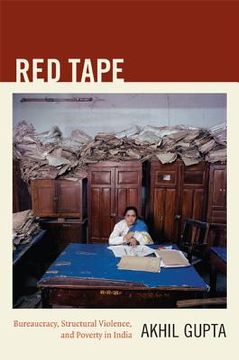
portada Red Tape: Bureaucracy, Structural Violence, and Poverty in India (a John Hope Franklin Center Book)
Type
Physical Book
Publisher
Year
2009
Language
English
Pages
384
Format
Paperback
Dimensions
23.1x15.5x2.5 cm
ISBN
9780822351108
ISBN13
9780822351108
Edition No.
2012th

Red Tape: Bureaucracy, Structural Violence, and Poverty in India (a John Hope Franklin Center Book)

Gupta, Akhil (Author) · Duke Univ Pr · Paperback

Red Tape: Bureaucracy, Structural Violence, and Poverty in India (a John Hope Franklin Center Book) - Gupta, Akhil

Cheaper New Book Imported to Austria
Delivery: 10 Sep - 17 Sep Shipping: 12 to 16 business days.
43,29 €
Faster New Book Imported to Austria
Delivery: 27 Aug - 01 Sep Shipping: 3 to 4 business days.
55,81 €
Import costs and 10% VAT included in the price ✅
43,29 €

Synopsis "Red Tape: Bureaucracy, Structural Violence, and Poverty in India (a John Hope Franklin Center Book) "

Red Tape presents a major new theory of the state developed by the renowned anthropologist Akhil Gupta. Seeking to understand the chronic and widespread poverty in India, the world's fourth largest economy, Gupta conceives of the relation between the state in India and the poor as one of structural violence. Every year this violence kills between two and three million people, especially women and girls, and lower-caste and indigenous peoples. Yet India's poor are not disenfranchised; they actively participate in the democratic project. Nor is the state indifferent to the plight of the poor; it sponsors many poverty amelioration programs. Gupta conducted ethnographic research among officials charged with coordinating development programs in rural Uttar Pradesh. Drawing on that research, he offers insightful analyses of corruption; the significance of writing and written records; and governmentality, or the expansion of bureaucracies. Those analyses underlie his argument that care is arbitrary in its consequences, and that arbitrariness is systematically produced by the very mechanisms that are meant to ameliorate social suffering. What must be explained is not only why government programs aimed at providing nutrition, employment, housing, healthcare, and education to poor people do not succeed in their objectives, but also why, when they do succeed, they do so unevenly and erratically.

Customers reviews

Frequently Asked Questions about the Book

All books in our catalog are Original.
The book is written in English.
The binding of this edition is Paperback.

Questions and Answers about the Book

Do you have a question about the book? Login to be able to add your own question.

Opinions about Bookdelivery

More customer reviews