Tracked shipping to Austria with premium packaging for just 3,99 € 

Ship to
Austria
0
  • argentina
  • chile
  • colombia
  • españa
  • méxico
  • perú
  • estados unidos
  • internacional

Select your country

Americas

Europe

Rest of the world

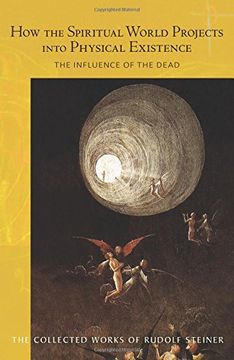
portada How the Spiritual World Projects Into Physical Existence: The Influence of the Dead (Cw 150)
Type
Physical Book
Translated by
Introduction by
Language
English
Pages
160
Format
Paperback
Dimensions
23.1 x 15.2 x 1.3 cm
Weight
0.25 kg.
ISBN13
9781855844049

How the Spiritual World Projects Into Physical Existence: The Influence of the Dead (Cw 150)

Rudolf Steiner (Author) · Anna R. Meuss (Translated by) · Margaret Jonas (Introduction by) · Rudolf Steiner Press · Paperback

How the Spiritual World Projects Into Physical Existence: The Influence of the Dead (Cw 150) - Steiner, Rudolf ; Jonas, Margaret ; Meuss, Anna R.

New Book Imported to Austria
Delivery: 30 Jun - 01 Jul Shipping: 2 to 2 business days.
21,50 €
Import costs and 10% VAT included in the price ✅
21,50 €

Synopsis "How the Spiritual World Projects Into Physical Existence: The Influence of the Dead (Cw 150)"

10 lectures, various cities, Jan. 12 - Dec. 23, 1913 (CW 150)"By cultivating spiritual thoughts here on Earth we can provide nourishment for the dead.... When fields lie fallow, they produce no crops to feed humanity, and people may die of starvation. The dead cannot die of starvation, of course; all they can do is suffer when spiritual life lies fallow on Earth." -- Rudolf SteinerThe founding of the Anthroposophical Society in 1913 marked a major change in Rudolf Steiner's work. Although Steiner had always been an independent spiritual researcher, the break with the theosophists removed all constraints, allowing for a full flowering of Anthroposophy. These lectures, presented to audiences in Germany, France, and Sweden, are filled with a freshness and vitality that reflect this new beginning, providing intriguing glimpses of great themes that Steiner was to develop in the years ahead.Death is a predominant topic here. Rudolf Steiner explains how people on Earth can reach the dead in a non-mediumistic way and how such interaction between "living" and "dead" is mutually beneficial. He states that people who do not recognize the being of Lucifer during their earthly life--those who have not "already got to intuit and know the luciferic impulses in the human soul properly while here in life"--will be "vampirized" by that being after passing through the gate of death. Steiner elaborates on the activities of the adversarial beings in today's civilization--spiritual powers that play a needed role in Earth's evolution--and how we can counteract them. The longer we can stay alive, for example, the greater the victory over Ahriman's activity. Even losing one's teeth has beneficial aspects, allowing us to "gain certain impulses, and these overcome Ahriman." Steiner relates the actions of such spiritual entities to child development, too, indicating the various influences in the seven-year cycles of growth.Also included are lectures on the Christian festivals and various works of art, including The Triumph of Death in the Composanto cemetery at Pisa, which reveals great secrets of humanity's evolution. Whatever subject Steiner addresses, it quickly becomes clear that these lectures were not relevant only to his audience in 1913; they also speak to contemporary souls around the world seeking spiritual direction and understanding.This volume is a translation from German of Die Welt des Geistes und ihr Hereinragen in das physische Dasein. Das Einwirken der Toten in der Welt der Lebenden (GA 150).
Rudolf Steiner
  (Author)
View Author's Page
Rudolf Steiner (Donji Kraljevec, Austro-Hungarian Empire, now Croatia, February 25 or 27, 1861-Dornach, Switzerland, March 30, 1925) was an Austrian philosopher, literary scholar, educator, artist, playwright, social thinker, and occultist. He was the founder of anthroposophy, Waldorf education, biodynamic agriculture, anthroposophic medicine, and the new artistic form of eurythmy.

He described anthroposophy as follows: Anthroposophy is a path of knowledge that would like to lead the spiritual in man to the spiritual in the universe. Those who feel certain questions about the essence of man and the world as a vital necessity as the one felt when we are hungry and thirsty can be anthroposophists.

Steiner proposed a form of ethical individualism, to which he later added a more explicitly spiritual component. He derived his epistemology from the worldview of Johann Wolfgang Goethe, according to which thought is an organ of perception just like the eye or the ear. Just as the eye perceives colors and the ear sounds, so thought perceives ideas.
See more
See less

Customers reviews

Frequently Asked Questions about the Book

All books in our catalog are Original.
The book is written in English.
The binding of this edition is Paperback.

Questions and Answers about the Book

Do you have a question about the book? Login to be able to add your own question.

Opinions about Bookdelivery

More customer reviews