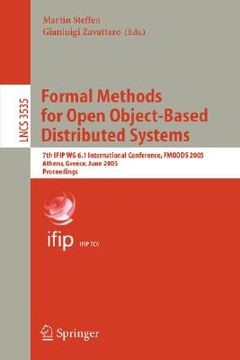
formal methods for open object-based distributed systems: 7th ifip wg 6.1 international conference, fmoods 2005, athens, greece, june 15-17, 2005, pro - Steffen, Martin ; Zavattaro, Gianluigi
Cheaper New Book
Imported
to Austria
Delivery: 25 Aug - 02 Sep
Shipping: 13 to 17 business days.
64,60 €
Faster New Book
Imported
to Austria
Delivery: 13 Aug - 17 Aug
Shipping: 5 to 6 business days.
81,21 €
Import costs and 10% VAT included in the price ✅
64,60 €
81,21 €
Choose the list to add your product or create one New List
formal methods for open object-based distributed systems: 7th ifip wg 6.1 international conference, fmoods 2005, athens, greece, june 15-17, 2005, pro
Steffen, Martin ; Zavattaro, Gianluigi
Synopsis "formal methods for open object-based distributed systems: 7th ifip wg 6.1 international conference, fmoods 2005, athens, greece, june 15-17, 2005, pro"
This volume contains the proceedings of FMOODS2005, the 7th IFIPWG6. 1 International Conference on Formal Methods for Open Object-Based Distributed Systems. The conference was held in Athens, Greece on June 15-17, 2005. The eventwasthe seventhmeeting ofthis conferenceseries, whichis held roughly- eryyearandahalf, withtheearliereventsheldrespectivelyinParis, Canterbury, Florence, Stanford, Twente, and Paris. ThegoaloftheFMOODSseriesofconferencesistobringtogetherresearchers whose work encompasses three important and related ?elds: - formal methods; - distributed systems; - object-based technology. Sucha convergenceis representativeofrecentadvancesin the?eld ofdistributed systems, and provides links between several scienti?c and technological com- nities, as represented by the conferences FORTE, CONCUR, and ECOOP. The objective of FMOODS is to provide an integrated forum for the pres- tation of research in the above-mentioned ?elds, and the exchange of ideas and experiences in the topics concerned with the formal methods support for open object-based distributed systems. For the call for papers, aspects of interest - cluded, but were not limited to: formal models; formal techniques for speci?- tion, design, or analysis; veri?cation, testing, and validation; component-based design; formal aspects of service-oriented computing; semantics and type s- tems for programming, coordination, or modelling languages; behavioraltyping; multiple viewpoint modelling and consistency between di?erent models; tra- formations of models; integration of quality-of-service requirements into formal models; formal models for security; formal approachesto distributed component frameworks;andapplications andexperience, carefullydescribed. Work onthese aspects of (o?cial and de facto) standardnotation and languagesfor serviceo- ented design, e. g. web services orchestration languages, was explicitly welcome.