Tracked shipping to Austria with premium packaging for just 3,99 € 

Ship to
Austria
0
  • argentina
  • chile
  • colombia
  • españa
  • méxico
  • perú
  • estados unidos
  • internacional

Select your country

Americas

Europe

Rest of the world

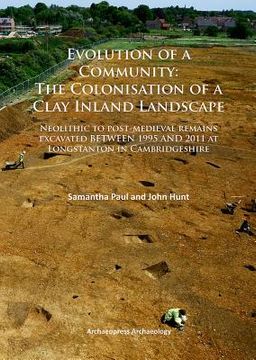
portada Evolution of a Community: The Colonisation of a Clay Inland Landscape: Neolithic to Post-Medieval Remains Excavated Over Sixteen Years at Longstanton
Type
Physical Book
Language
English
Pages
257
Format
Paperback
ISBN13
9781784910860

Evolution of a Community: The Colonisation of a Clay Inland Landscape: Neolithic to Post-Medieval Remains Excavated Over Sixteen Years at Longstanton

John Hunt (Author) · Samantha Paul (Author) · Archaeopress Publishing · Paperback

Evolution of a Community: The Colonisation of a Clay Inland Landscape: Neolithic to Post-Medieval Remains Excavated Over Sixteen Years at Longstanton - Paul, Samantha ; Hunt, John

New Book Imported to Austria
Delivery: 17 Aug - 20 Aug Shipping: 12 to 14 business days.
123,74 €
Import costs and 10% VAT included in the price ✅
123,74 €

Synopsis "Evolution of a Community: The Colonisation of a Clay Inland Landscape: Neolithic to Post-Medieval Remains Excavated Over Sixteen Years at Longstanton"

The movement of people from the fen edge and river valleys into the clay lands of eastern England has become a growing area of research. The opportunity of studying such an environment and investigating the human activities that took place there became available 9 km to the north-west of Cambridge at the village of Longstanton. The archaeological excavations that took place over a sixteen year period have made a significant contribution to charting the emergence of a Cambridgeshire clayland settlement and its community over six millennia. Evolution of a Community chronologically documents the colonisation of this clay inland location and outlines how it was not an area on the periphery of activity, but part of a fully occupied landscape extending back into the Mesolithic period. Subsequent visits during the Late Neolithic became more focused when the locality appears to have been part of a religious landscape that included a possible barrow site and ritual pit deposits. The excavations indicate that the earliest permanent settlement at the site dates to the Late Bronze Age, with the subsequent Iron Age phases characterised as a small, modest and inward-looking community that endured into the Roman period with very little evidence for disjuncture during the transition. The significant discovery of a group of seventh-century Anglo-Saxon burials which produced rare evidence for infectious deceases is discussed within the context of 'final phase' cemeteries and the influence of visible prehistoric features within the local landscape. The excavation of the Late Anglo-Saxon and medieval rural settlement defined its origins and layout which, alongside the artefactual and archaeobotanical assemblages recovered creates a profile over time of the life and livelihood of this community that is firmly placed within its historical context.

Customers reviews

Frequently Asked Questions about the Book

All books in our catalog are Original.
The book is written in English.
The binding of this edition is Paperback.

Questions and Answers about the Book

Do you have a question about the book? Login to be able to add your own question.

Opinions about Bookdelivery

More customer reviews