Tracked shipping to Austria with premium packaging for just 3,99 € 

Ship to
Austria
0
  • argentina
  • chile
  • colombia
  • españa
  • méxico
  • perú
  • estados unidos
  • internacional

Select your country

Americas

Europe

Rest of the world

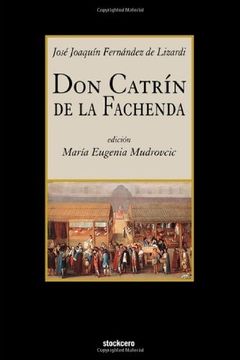
portada Don Catrin de la Fachenda (in Spanish)
Type
Physical Book
Publisher
Topic
general spanish language ; authors, mexican
Year
2009
Language
Spanish
Pages
120
Format
Paperback
ISBN13
9781934768297

Don Catrin de la Fachenda (in Spanish)

José Joaquín Fernandez de Lizardi (Author) · Stockcero · Paperback

Don Catrin de la Fachenda (in Spanish) - José Joaquín Fernandez de Lizardi

New Book Imported to Austria
Delivery: 01 Jul - 03 Jul Shipping: 5 to 6 business days.
29,36 €
Import costs and 10% VAT included in the price ✅
29,36 €

Synopsis "Don Catrin de la Fachenda (in Spanish)"

Completed in 1819 and approved by the censorship in 1820, "Don Catrín de la Fachenda" was the last novel written by José J. Fernández de Lizardi, and the only one that remained unpublished until 1832, five years after the death of its author. At first glance, the novel does not seem -at least morally- to doubt: bad characters die, "catrinismo" is sensationally defeated and the truth left standing is monopolized by the clergy, military, and nobility. Perhaps dazzled by the canonization process that Fernández de Lizardi underwent at the hands of liberal historiography towards the end of the 19th century, critics tend to read "Don Catrín de la Fachenda" as the representative of a colonial order that an emergent Mexican nation must destroy in order to advance, free from those elements that halt progress, toward the promising period of liberal modernization. However, one can also trace in the protagonist the signs of the anxiety Lizardi experienced due to the development of a revolution that sooner rather than later would impose what he perceives as a materialist and bourgeois social code. This is probably why all political expectations in the novel rely on those redeemer-characters that form part of a colonial apparatus that Lizardi seems committed to modernize at all costs: clergymen that quote Rousseau, military officials who declare their loyalty to the king and the law, creole-aristocrats that do not speak of a nobility based on blood but of a nobility of virtues, and lettered men who fervently trust in the power of religion, education and work. Displaying what could be classified as a monarchical-constitutional reformism, Lizardi expects such privileged agents to carry out, without violence, the political and social changes needed in New Spain at the beginning of the 19th Century. Far from being in line with a view of Lizardi as revolutionary and liberal, the results of the clash of discourses that occurs within "Don Catrín de la Fachenda" seems to confirm the author's nostalgia for a colonial order in which eternal truth, honor and authority prevail as bastions of the church, the army and the nobility. In the current edition, María Eugenia Mudrovcic undertakes the analysis of Lizardi's last novel as well as provides notes that facilitate an in depth understanding of a text that though entertaining, is complex and contradictory.
José Joaquín Fernandez de Lizardi
  (Author)
View Author's Page
José Joaquín Fernández de Lizardi (Mexico City, 1776–1827), known as "El Pensador Mexicano", was a prominent writer, journalist, and precursor of the novel in Latin America. His most famous work, El Periquillo Sarniento (1816), is considered the first novel written in Latin America. Other notable works include La Quijotita y su prima (1818), Noches tristes y día alegre (1818) and Don Catrín de la Fachenda (published posthumously in 1832). These novels, framed in the picaresque and costumbrista genre, combine social criticism with a moralizing and educational approach

In addition to his literary work, Fernández de Lizardi was a fervent defender of freedom of expression and actively participated in the Mexican independence movement. In 1812, he founded the newspaper El Pensador Mexicano, from which he openly criticized the viceregal government, earning him censorship and imprisonment. His commitment to social justice and popular education established him as a key figure in the transition from New Spain to independent Mexico.
See more
See less

Customers reviews

Frequently Asked Questions about the Book

All books in our catalog are Original.
The book is written in Spanish.
The binding of this edition is Paperback.

Questions and Answers about the Book

Do you have a question about the book? Login to be able to add your own question.

Opinions about Bookdelivery

More customer reviews