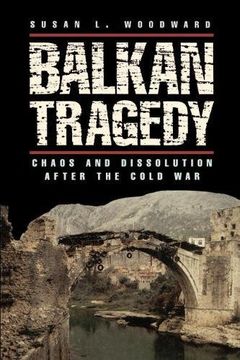
Balkan Tragedy: Chaos and Dissolution After the Cold war
Susan L. Woodward
Synopsis "Balkan Tragedy: Chaos and Dissolution After the Cold war "
Yugoslavia was well positioned at the end of the cold war to make a successful transition to a market economy and westernization. Yet two years later, the country had ceased to exist, and devastating local wars were being waged to create new states. Between the fall of the Berlin Wall in November 1989 and the start of the war in Bosnia-Herzegovina in March 1992, the country moved toward disintegration at astonishing speed. The collapse of Yugoslavia into nationalist regimes led not only to horrendous cruelty and destruction, but also to a crisis of Western security regimes. Coming at the height of euphoria over the end of the cold war and the promise of a """"new world order,"""" the conflict presented Western governments and the international community with an unwelcome and unexpected set of tasks. Their initial assessment that the conflict was of little strategic significance or national interest could not be sustained in light of its consequences. By 1994 the conflict had emerged as the most challenging threat to existing norms and institutions that Western leaders faced. And by the end of 1994, more than three years after the international community explicitly intervened to mediate the conflict, there had been no progress on any of the issues raised by the country's dissolution. In this book, Susan Woodward explains what happened to Yugoslavia and what can be learned from the response of outsiders to its crisis. She argues that focusing on ancient ethnic hatreds and military aggression was a way to avoid the problem and misunderstood nationalism in post-communist states. The real origin of the Yugoslav conflict, Woodward explains, is the disintegration of governmental authority and the breakdown of a political and civil order, a process that occurred over a prolonged period. The Yugoslav conflict is inseparable from international change and interdependence, and it is not confined to the Balkans but is part of a more widespread phenomenon of political disintegration. Woodward's analysis is based on her first-hand experience before the country's collapse and then during the later stages of the Bosnian war as a member of the UN operation sent to monitor cease-fires and provide humanitarian assistance. She argues that Western action not only failed to prevent the spread of violence or to negotiate peace, but actually exacerbated the conflict. Woodward attempts to explain why these challenges will not cease or the Yugoslav conflicts end until the actual causes of the conflict, the goals of combatants, and the fundamental issues they pose for international order are better understood and addressed.