Hallo! Tracked shipping to Austria with Delivery Duty Paid for just €3.99  

Ship to
Austria
0
  • argentina
  • chile
  • colombia
  • españa
  • méxico
  • perú
  • estados unidos
  • internacional

Select your country

Americas

Europe

Rest of the world

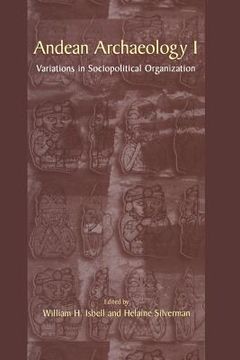
portada Andean Archaeology I: Variations in Sociopolitical Organization
Type
Physical Book
Publisher
Language
English
Pages
390
Format
Paperback
Dimensions
23.4x15.6x2.1 cm
Weight
0.57 kg.
ISBN13
9781461351719

Andean Archaeology I: Variations in Sociopolitical Organization

Isbell, William H. ; Silverman, Helaine (Author) · Springer · Paperback

Andean Archaeology I: Variations in Sociopolitical Organization - Isbell, William H. ; Silverman, Helaine

Cheaper New Book Imported to Austria
Delivery: 23 Oct - 30 Oct Shipping: 15 to 19 business days.
178,71 €
Faster New Book Imported to Austria
Delivery: 12 Oct - 14 Oct Shipping: 6 to 7 business days.
229,48 €
Import costs and 10% VAT included in the price ✅
178,71 €

Synopsis "Andean Archaeology I: Variations in Sociopolitical Organization"

Study of the origin and development of civilization is of unequaled importance for understanding the cultural processes that create human societies. Is cultural evolution directional and regular across human societies and history, or is it opportunistic and capricious? Do apparent regularities come from the way inves- tigators construct and manage knowledge, or are they the result of real constraints on and variations in the actual processes? Can such questions even be answered? We believe so, but not easily. By comparing evolutionary sequences from different world civilizations scholars can judge degrees of similarity and difference and then attempt explanation. Of course, we must be careful to assess the influence that societies of the ancient world had on one another (the issue of pristine versus non-pristine cultural devel- opment: see discussion in Fried 1967; Price 1978). The Central Andes were the locus of the only societies to achieve pristine civilization in the southern hemi- sphere and only in the Central Andes did non-literate (non-written language) civ- ilization develop. It seems clear that Central Andean civilization was independent on any graph of archaic culture change. Scholars have often expressed appreciation of the research opportunities offered by the Central Andes as a testing ground for the study of cultural evolu- tion (see, e. g., Carneiro 1970; Ford and Willey 1949: 5; Kosok 1965: 1-14; Lanning 1967: 2-5).

Customers reviews

Frequently Asked Questions about the Book

All books in our catalog are Original.
The book is written in English.
The binding of this edition is Paperback.

Questions and Answers about the Book

Do you have a question about the book? Login to be able to add your own question.

Opinions about Bookdelivery

More customer reviews