Tracked shipping to Austria with premium packaging for just €3,99 

Ship to
Austria
0
  • argentina
  • chile
  • colombia
  • españa
  • méxico
  • perú
  • estados unidos
  • internacional

Select your country

Americas

Europe

Rest of the world

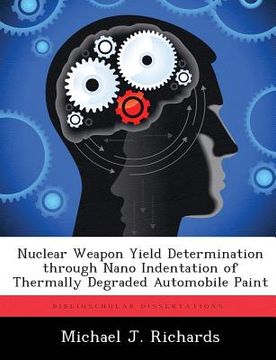
portada Nuclear Weapon Yield Determination through Nano Indentation of Thermally Degraded Automobile Paint
Type
Physical Book
Publisher
Language
English
Pages
74
Format
Paperback
Dimensions
24.6 x 18.9 x 0.4 cm
Weight
0.15 kg.
ISBN13
9781288311453
Categories

Nuclear Weapon Yield Determination through Nano Indentation of Thermally Degraded Automobile Paint

Michael J. Richards (Author) · Biblioscholar · Paperback

Nuclear Weapon Yield Determination through Nano Indentation of Thermally Degraded Automobile Paint - Richards, Michael J.

New Book Imported to Austria *
Delivery: 29 Apr - 11 May Shipping: 15 to 22 business days.
72,71 €
* Import costs and 10% VAT included in the price ✅
72,71 €
Delivery to any Austria address between Wednesday, April 29 and Monday, May 11

Synopsis "Nuclear Weapon Yield Determination through Nano Indentation of Thermally Degraded Automobile Paint"

This work investigated the suitability of automotive clearcoat as a nuclear weapon yield sensor, using the change in elastic modulus as the primary metric. The AFIT Xenon Thermal Simulator (AXTS) was used to simulate a nuclear thermal pulse. The elastic modulus of the clearcoat was measured using a nano indenter. During this research the power density of the AXTS beam was increased from 44.7 to 63.7 W/cm2. The morphological steps through which automobile paint proceeds as it thermally degrades were identified and correlated with temperatures. A computer model was created and used to ensure that the paint's time-temperature response to the AXTS pulse was comparable to that of a replicate nuclear thermal pulse. Clearcoat's physical properties exhibit a low sensitivity to incident thermal energy. Variability among these properties remains essentially unchanged by exposure to the thermal pulse. A weak correlation between change in elastic modulus and exposure time was identified. A similarly weak correlation between exposure time and each of load on sample, harmonic stiffness, and hardness was also identified. It was concluded that these correlation were too weak to be used for post-detonation forensics.

Customers reviews

Frequently Asked Questions about the Book

All books in our catalog are Original.
The book is written in English.
The binding of this edition is Paperback.

Questions and Answers about the Book

Do you have a question about the book? Login to be able to add your own question.

Opinions about Bookdelivery

More customer reviews