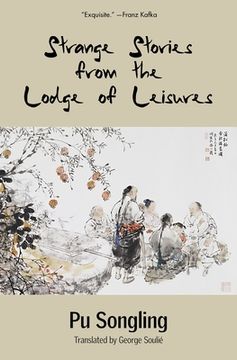
Strange Stories From the Lodge of Leisures (Warbler Classics)
Pu Songling
Synopsis "Strange Stories From the Lodge of Leisures (Warbler Classics) "
Strange Stories from the Lodge of Leisures gathers twenty-five stories from Pu Songling's collection of more than four hundred short stories-exquisitely amusing miniatures that are regarded as the pinnacle of classical Chinese fiction. His work departed from the prevailing literary fashion that was dominated by more realistic stories written in the colloquial language. Pu instead wrote his stories in the classical idiom, freely adopting forms and themes from the old "marvel tales" of the Tang and Song dynasties. Although Pu lived and died as an obscure provincial schoolteacher, his work gained fame when it was first printed in 1766, some fifty years after his death, inspiring many imitations and creating a new vogue for classical stories. His tales have not only spawned translations, adaptations, and sequels, but have also inspired world-renowned writers such as Franz Kafka, Lafcadio Hearn, Jorge Luis Borges, and Mo Yan.Pu's tales are populated with ghosts, foxes, immortals, and demons, but he focused on the everyday life of commoners. He used the supernatural and the unexplainable to illustrate his ideas of society and government, to criticize the corruption and injustice in society, and sympathized with the poor. Pu is concerned with four main themes: the skewed feudal system, the corrupt examination system of his day, the love between poor scholars and powerless women, and reforming bad behavior. He embedded Confucian-styled moral standards and Taoist principles into parables but the enduring genius of his writing is that it never fails to entertain even as it aims to enlighten.
Pu Songling (蒲松龄, 5 de junio de 1640 – 25 de febrero de 1715) fue un escritor chino de la dinastía Qing que se ganó la reputación de maestro de los relatos extraños y sobrenaturales. Habiendo nacido en Zichuan (actual Zibo, provincia de Shandong) y viviendo gran parte de su vida como maestro particular, dedicó años a recoger historias de lo insólito y lo fantástico, publicando posteriormente su obra más famosa, Liáozhāi zhìyì (generalmente traducida como Cuentos fantásticos de un estudio de lo parlante o Strange Tales from a Chinese Studio). En esta recopilación —más de 400 relatos— fusiona el folclore, lo fantástico y la crítica social, deteniéndose en la condición humana y los vicios del poder.
El estilo de Pu Songling destaca por su uso del chino clásico y la tradición de los “chuanqi” (relatos maravillosos de las dinastías Tang y Song) dentro de un contexto literario moderno para su época. Aunque no existen registros de premios literarios formales otorgados en su vida, su legado ha trascendido siglos y fronteras: muchas de sus historias han sido adaptadas al teatro, cine y televisión, y se le considera una influencia clave en la literatura de lo fantástico en el mundo chino y más allá.