Hallo! Tracked shipping to Austria with Delivery Duty Paid for just €3.99  

Ship to
Austria
0
  • argentina
  • chile
  • colombia
  • españa
  • méxico
  • perú
  • estados unidos
  • internacional

Select your country

Americas

Europe

Rest of the world

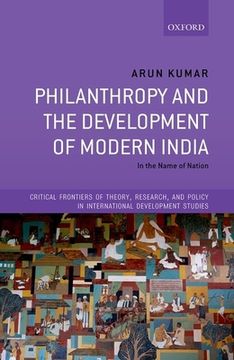
portada Philanthropy and the Development of Modern India: In the Name of Nation (Critical Frontiers of Theory, Research, and Policy in International Development Studies)
Type
Physical Book
Language
English
Pages
240
Format
Hardcover
Dimensions
22.4x15.5x2 cm
Weight
0.50 kg.
ISBN13
9780198868637

Philanthropy and the Development of Modern India: In the Name of Nation (Critical Frontiers of Theory, Research, and Policy in International Development Studies)

Arun Kumar (Author) · Oxford University Press · Hardcover

Philanthropy and the Development of Modern India: In the Name of Nation (Critical Frontiers of Theory, Research, and Policy in International Development Studies) - Kumar, Arun

New Book Imported to Austria
Delivery: 26 Nov - 01 Dec Shipping: 8 to 10 business days.
169,00 €
Import costs and 10% VAT included in the price ✅
169,00 €

Synopsis "Philanthropy and the Development of Modern India: In the Name of Nation (Critical Frontiers of Theory, Research, and Policy in International Development Studies) "

Drawing on the history of the philanthropy of India's economic elites, Arun Kumar discusses how their ideas and understanding of development have shifted and changed over time. Going beyond the more familiar criticisms of development's entanglements with colonialism, Kumar interrogates thechanges in development imaginaries in terms of modernity's entanglements with the national question, including anti-colonial nationalism and post-colonial nation-building during the twentieth century. Development, he suggests, can be usefully read and critiqued as national-modern. Philanthropy andthe Development of Modern India plots the careers of the national-modern in four main sites of development: civil society, community, science and technology, and selfhood. In an unusual move reading socio-economic nationalist reform from the first half of the twentieth century alongsidepost-colonial development from the second half, Kumar uncovers the lineages of contemporary development ideas such as self-care, self-reliance, merit, etc. In all this, elites were driven by a 'pedagogic reflex': to teach different sections of Indian society of how to be modern and developed.Contrary to development studies' characterization of elites as anti-development or captors of scarce resources, Kumar shows how elites longed for development for others. Development provided the moral justification, in their calculations, for protecting their commercial interests as they navigatedthe turbulent Indian twentieth century.

Customers reviews

Frequently Asked Questions about the Book

All books in our catalog are Original.
The book is written in English.
The binding of this edition is Hardcover.

Questions and Answers about the Book

Do you have a question about the book? Login to be able to add your own question.

Opinions about Bookdelivery

More customer reviews